

Seafarers Employment Agreement for Yacht Crew: MLC Compliance & Key Clauses
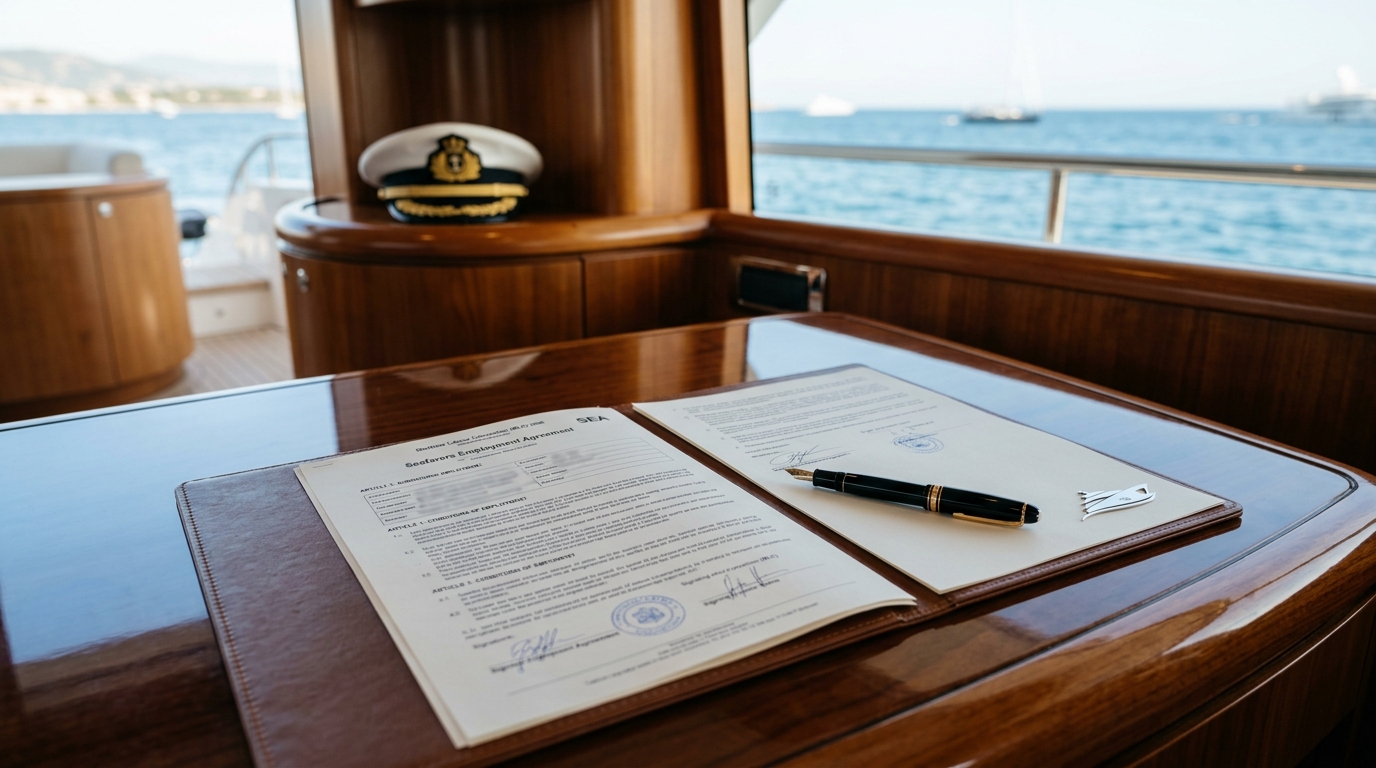
A Seafarers Employment Agreement for yacht crew (SEA) serves as the legal foundation regulating working conditions, compensation, repatriation, and health protection aboard motor and sailing yachts. Regulated under the Maritime Labour Convention (MLC 2006), a legally sound SEA protects both yacht owners and crew members from disputes, non-compliance penalties, and operational disruptions.
What is a Seafarers Employment Agreement (SEA) for Yacht Crew?
A Seafarers Employment Agreement is a mandatory written contract between a seafarer and a yacht owner or employer. Under the MLC 2006 regulations, every crew member working on a commercial vessel or an MLC-compliant private yacht must sign an SEA before going sea. Unlike standard shore-based employment contracts, an SEA incorporates international maritime labor laws tailored specifically to living and working at sea.
Mandatory Clauses Required in an MLC-Compliant SEA
To comply with flag state inspections and Port State Control (PSC) audits, a Seafarers Employment Agreement must contain explicit details regarding the terms of employment. Essential required elements include:
- Full Identity Details: Full name, date of birth, birthplace, and discharge book number of the crew member, alongside the official name and registered address of the employer.
- Position and Duties: Specific rank, onboard department (e.g., Chief Stewardess, Deckhand, Chef), and reporting structure.
- Wages and Payment Frequency: Base salary, overtime compensation terms, payment schedules, and currency of payment.
- Paid Leave Entitlement: Statutory annual leave calculation, typically framed as a specific number of days accrued per month served.
- Termination and Notice Periods: Conditions under which either party can terminate the agreement, including minimum notice periods for both crew and owner.
- Repatriation Rights: Explicit coverage detailing the employer's obligation to transport crew to their home port upon contract completion or valid termination.
- Health and Social Security Protection: Medical care provisions onboard and ashore, sickness benefit details, and insurance coverage.
For a detailed breakdown of contract structures and operational guidelines, review our guide on yacht crew employment contracts and essential standards.
Key Differences Between Commercial and Private Yacht SEAs
The regulatory enforcement of an SEA varies depending on whether a vessel operates commercially or privately:
- Commercial Yachts: Must strictly adhere to MLC 2006 standards. Flag states mandate standardized SEAs, which are regularly audited during charter inspections and PSC checks.
- Voluntary MLC Compliance on Private Yachts: While non-commercial yachts may not strictly fall under mandatory MLC enforcement depending on their flag state, industry best practices encourage private owners to adopt standardized SEAs to attract top-tier crew and mitigate liability.
Common Pitfalls in Yacht Crew Employment Agreements
Drafting or signing an ambiguous SEA can lead to legal exposure and administrative friction. Frequently observed errors include:
- Unclear Work and Rest Hours: Failing to detail compliance with international standards regarding minimum rest periods (STCW and MLC regulations).
- Vague Repatriation Conditions: Ambiguity regarding who covers travel expenses if a crew member resigns early or is dismissed for cause.
- Missing Social Security & Insurance Disclosures: Neglecting to clearly define medical insurance coverage during off-duty hours or off-season periods.
Workplace clarity directly impacts crew retention and operational excellence onboard. Working with a dedicated recruitment agency helps ensure contracts align with international standards. Learn more about professional staffing solutions through our yacht crew placement services.
Frequently Asked Questions About Yacht Crew SEAs
Is a Seafarers Employment Agreement required for seasonal yacht crew?
Yes. Whether hired for a single summer charter season or a permanent year-round position, every crew member onboard an MLC-compliant vessel must have a signed SEA before starting work.
What happens if a yacht owner fails to provide an SEA?
Operating without valid SEAs can result in vessel detention during Port State Control inspections, financial penalties, and loss of commercial charter authorization.
Can an SEA be terminated prematurely by either party?
Yes, provided the notice period specified within the contract is respected by either the crew member or the employer, except in circumstances involving gross misconduct.
Structuring Compliant Contracts for Your Fleet
Drafting robust employment agreements requires a clear understanding of international maritime law, flag state requirements, and practical crew management. Yacht owners, management companies, and captains benefit from expert guidance to maintain compliant operations and high crew retention rates.
For tailored placement solutions, contract guidance, and consultancy support, contact Atlantico Yachting to speak with our specialists.